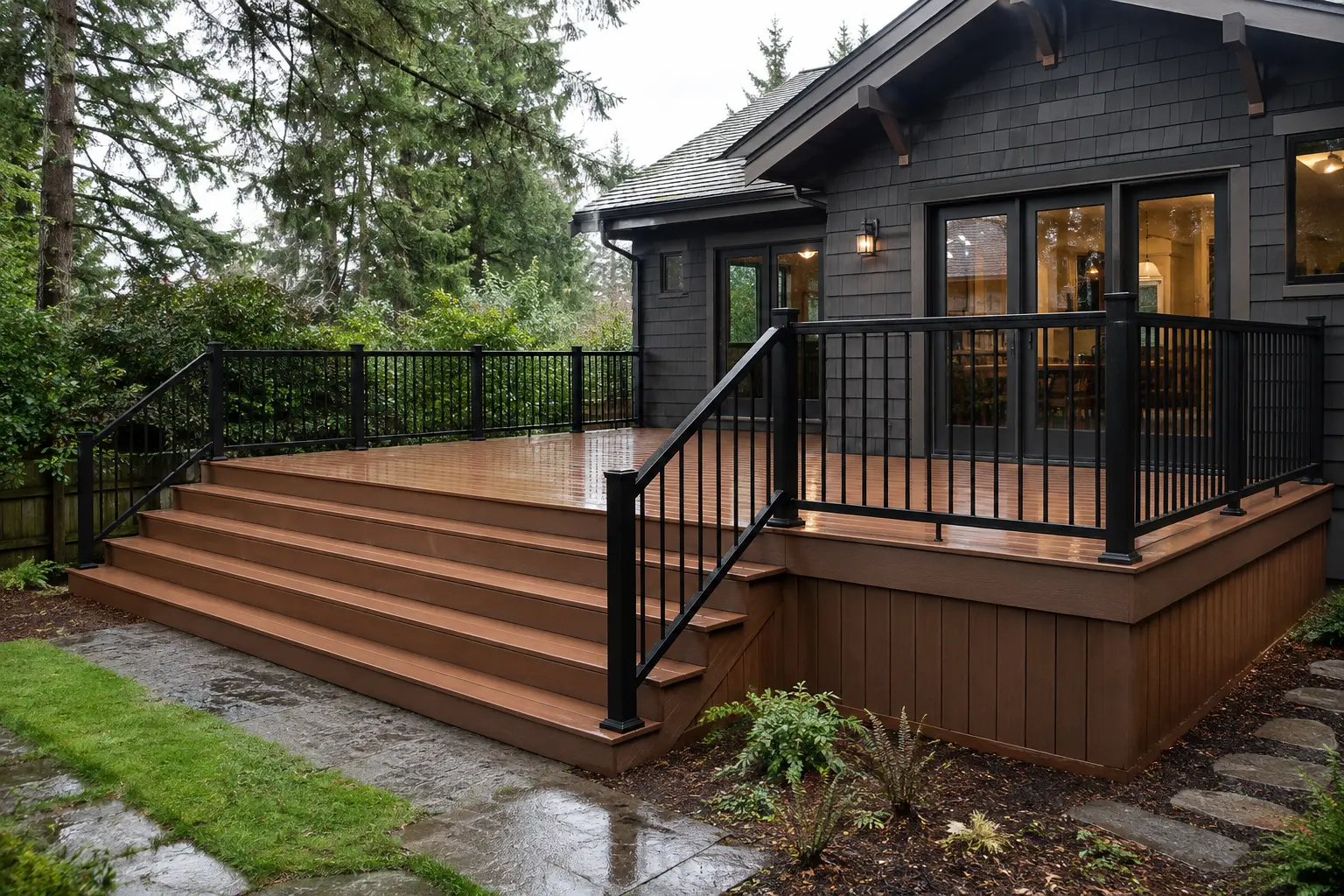
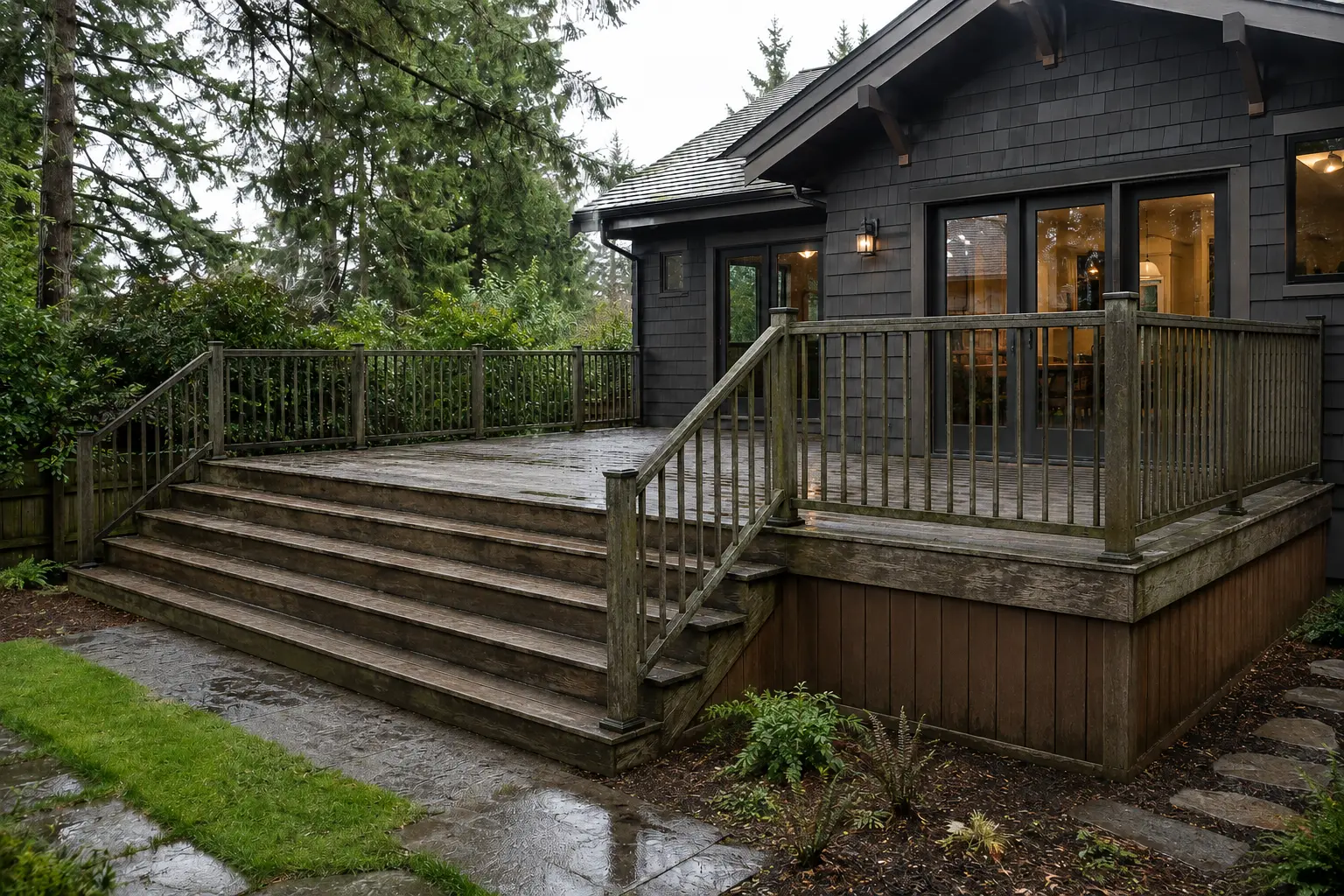
Project scope
What this project can include
- Damaged deck boards
- Loose railings and stairs
- Rot and moisture damage
- Deck staining and refinishing
- Resurfacing and restoration
- Repair-versus-rebuild assessment
Start below the surface
Replacing boards can improve appearance, but it only makes sense when the supporting structure is sound. A contractor should inspect accessible joists, beams, posts, footings, ledger connections, fasteners, stair framing, and guard attachments before recommending resurfacing.
Deck staining, sanding, and refinishing
A finish performs best when cleaning, drying, preparation, and product selection match the existing wood and exposure. Peeling coatings, embedded dirt, failed stain, and uneven weathering may require different preparation. Refinishing can improve and protect a sound surface; it cannot correct rot or unstable framing.
Resurfacing, restoration, and waterproofing
Localized damage may call for a few boards, stair components, railing work, or targeted water-management repairs. A resurfacing proposal should state what remains, what is replaced, and how transitions are handled. Under-deck drainage or waterproofing is a separate system that must be compatible with the structure and intended use below.
Preserve what still has value
The goal is not automatically to replace everything. A thoughtful deck restoration scope keeps sound components, corrects the source of damage, uses compatible materials, and explains where new work will look different from weathered surfaces.