Project scope
What this project can include
- Cedar privacy fences
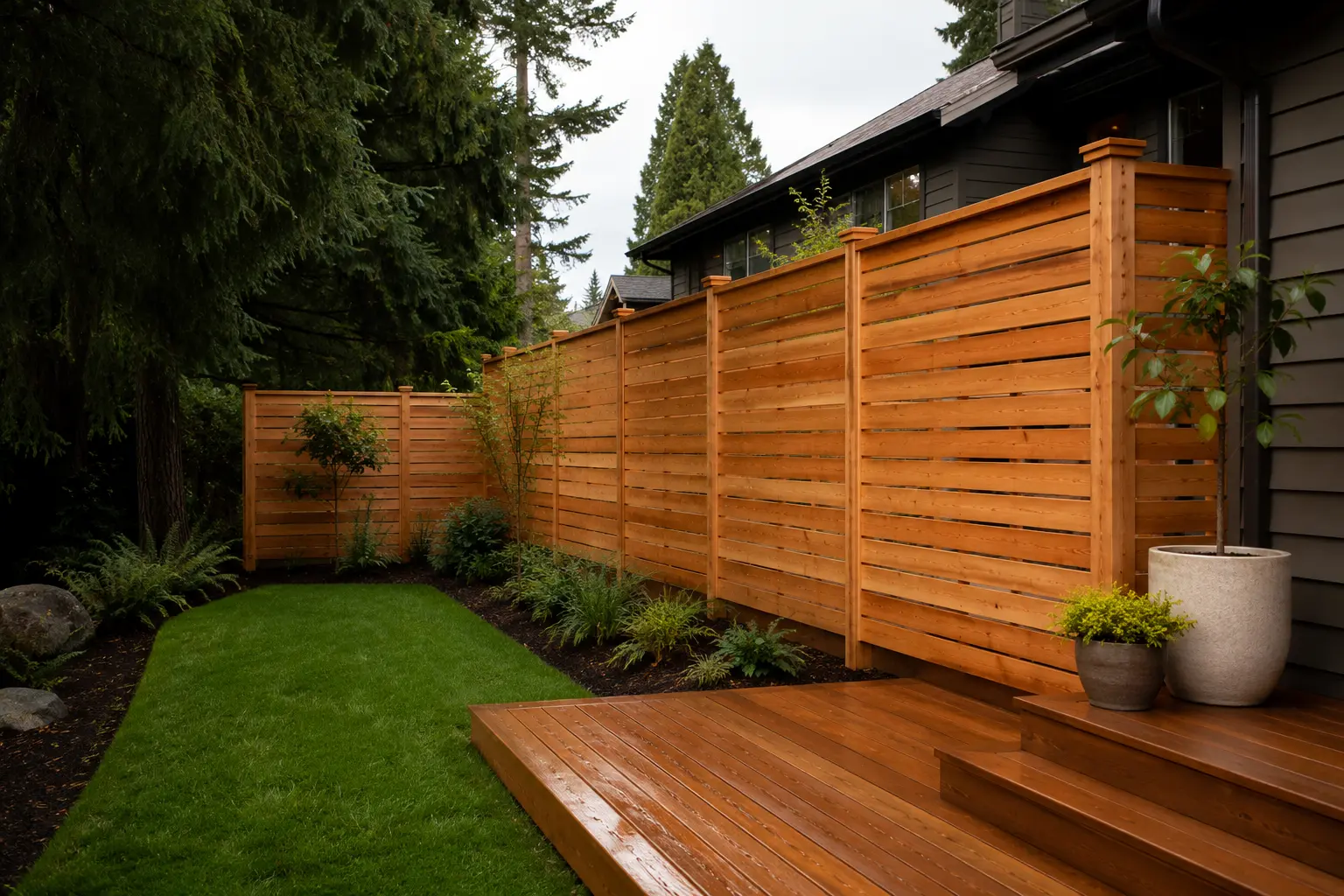
- Horizontal wood fencing
- Picket and open styles
- Good-neighbor fence designs
- Wood gates and transitions
- Existing fence replacement
Why cedar is common around Portland homes
Cedar offers natural color, dimensional flexibility, and inherent resistance to decay, making it a familiar fit for Pacific Northwest landscapes. Different cedar grades and board profiles vary in appearance and price, so proposals should state what material is actually included.
Vertical, horizontal, and good-neighbor designs
Vertical boards are efficient and forgiving, while horizontal fences create a more contemporary line and require careful framing to remain straight. Good-neighbor designs present a finished appearance on both sides and can be useful along shared boundaries.
Details that protect a wood fence
Wood should be kept clear of persistent soil contact, supported by appropriate rails and posts, and assembled with compatible corrosion-resistant fasteners. Drainage, sprinklers, vegetation, finish, and sun exposure all influence how it ages.