Oregon CollectiveStart a project

Portland Fence & Deck Collective

Repair the weak point before it becomes a full replacement.

A leaning section, dragging gate, or rotted post does not always mean the whole fence has reached the end of its life. The right repair starts by identifying whether the visible damage is isolated or a symptom of a broader structural problem.

Start your project request

Project scope

What this project can include

  • Leaning and failed posts
  • Broken or rotted boards
  • Gate alignment and hardware
  • Wind and storm damage
  • Partial section replacement
  • Fence condition assessment

Repair versus replacement

Targeted repair often makes sense when most posts and rails remain sound and the damage is limited to a section, gate, or hardware. Replacement becomes more practical when failure is widespread, materials are severely weathered, or repeated repairs would approach the cost of rebuilding.

Fence post repair and replacement

A leaning fence often begins with one or more failed posts. Persistent moisture can accelerate wood decay, while saturated soil, wind, and changing grades can loosen footings. A repair contractor should determine whether a post can be stabilized or needs to be removed and reset without damaging sound panels and rails.

Fence panel and gate repair

Broken boards, damaged panels, sagging gates, failed hinges, and latches that no longer align may be repairable without rebuilding the full run. The inspection should identify why the component failed so the work corrects the cause rather than only the visible symptom.

Match the existing fence where possible

A repair should preserve the appearance of the surrounding fence when matching material is available. New wood will naturally look brighter at first, then weather toward the existing color. For older or discontinued systems, a contractor can explain the closest match and whether a clean section replacement will look better.
Project perspective

See what a full renewal can change.

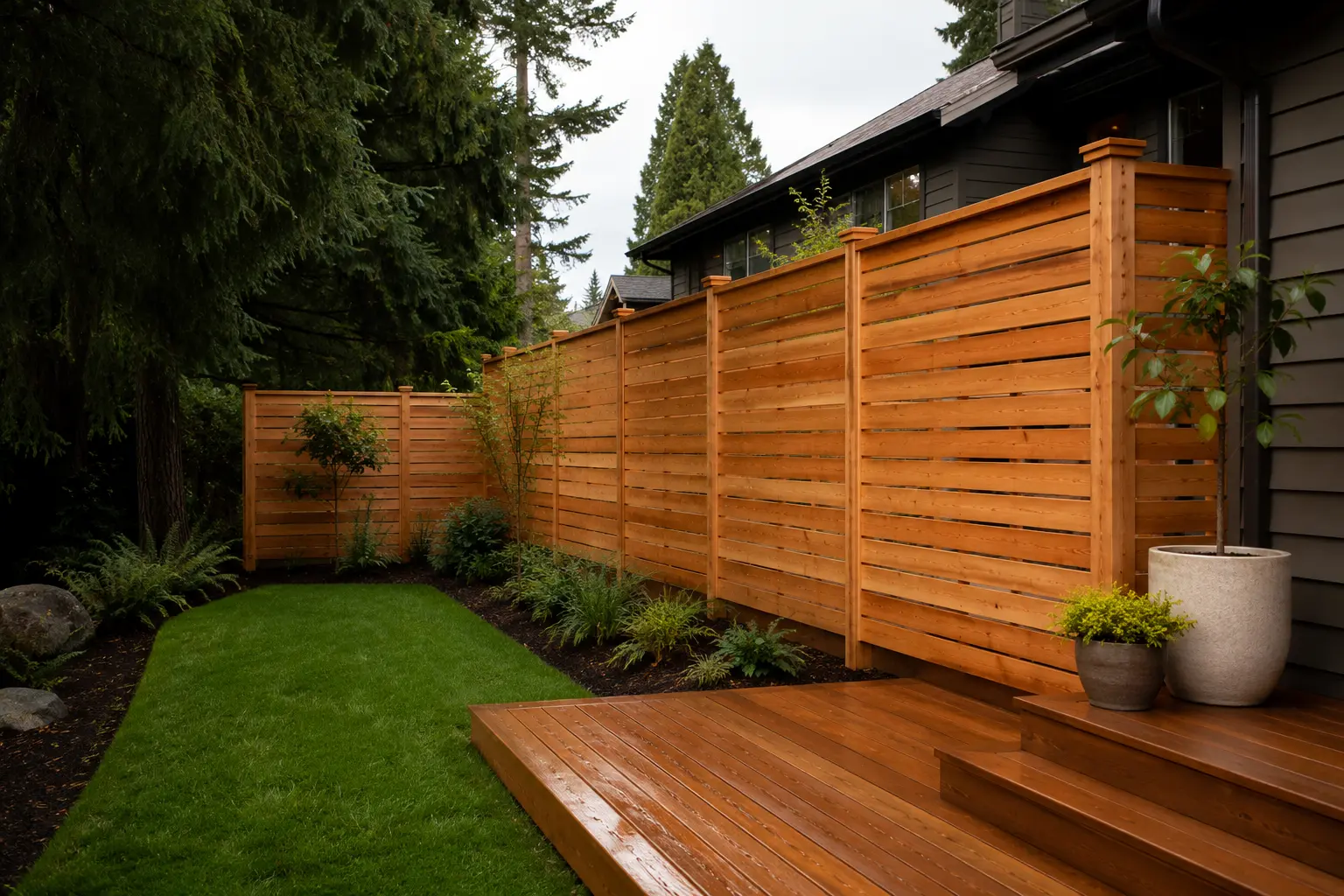
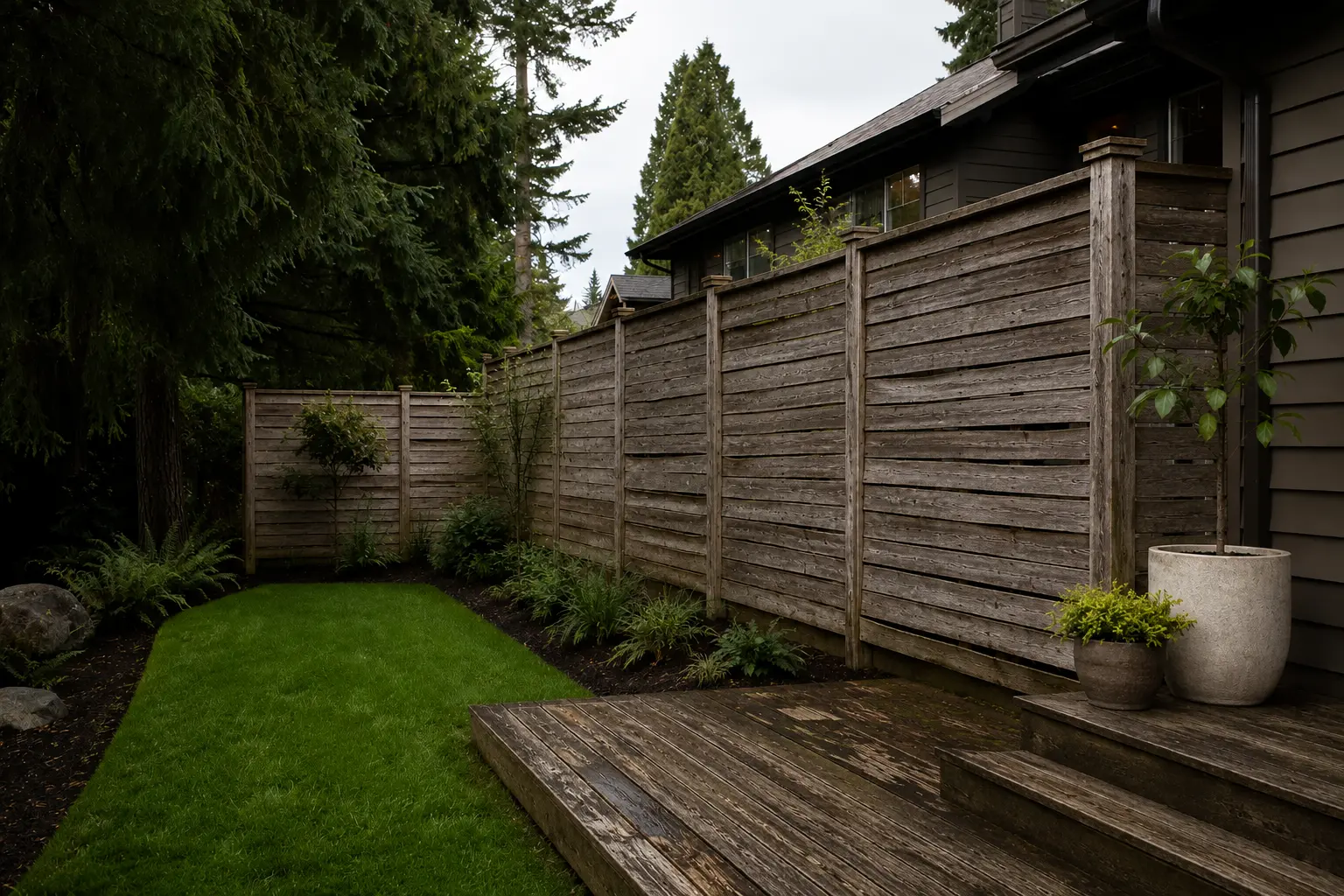
A visual comparison can clarify the difference between weathered materials and a coordinated rebuild. The actual repair scope still begins below the surface.

Visualization of a renewed horizontal cedar fence and deck
Visualization of a weathered cedar fence and deck before renewal
BeforeAfter

Drag to compare

Planning visualization generated for Oregon Collective. It is not a photograph of member work, a promised design, or a project estimate.

Technical fence guide

Look past the finished face.

Explore the parts that support a fence, then switch to common repair clues. This is a planning diagram; actual specifications depend on the system, site, loads, and current local requirements.

Swipe sideways to inspect the full diagram.

Simplified fence inspection diagram highlighting a leaning post, failed rail, ground contact, sagging gate, and corroded hardware12345VISIBLE CLUES — INSPECT THE CAUSE

Select a detail

Leaning post

Movement can begin with a failed post, loose footing, saturated soil, wind loading, or decay near grade. Repair should address the cause—not only pull the fence upright.

Common questions

Fence repair questions